
GRACE IN GOVERNANCE: GARIMA SINGH ON LEADERSHIP, LIVELIHOODS AND WOMEN’S EMPOWERMENT

Read Time:4 Minute, 27 Second
GRACE IN GOVERNANCE: GARIMA SINGH (IAS)
ON LEADERSHIP, LIVELIHOODS AND WOMEN’S EMPOWERMENT
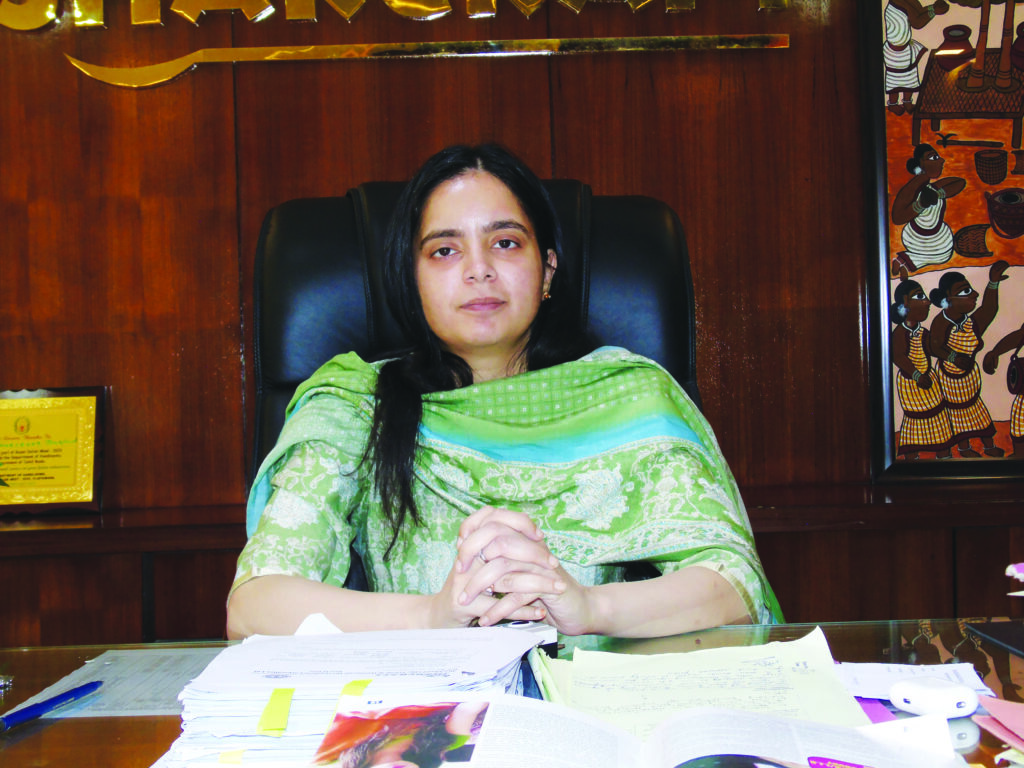
In the quiet yet demanding corridors of public administration, Garima Singh has carved a journey defined by clarity of purpose, institutional discipline and deep grassroots engagement. A 2016-batch IAS officer of the Jharkhand cadre, she represents a generation of women leaders who are not merely navigating governance but reshaping it with empathy and strategic vision. Today, as Managing Director of Jharcraft, she is driving a focused mission to transform Jharkhand’s traditional handloom and handicraft ecosystem into a vibrant engine of livelihood and cultural pride. This Women’s Day, her journey stands as a compelling portrait of leadership rooted in conviction and compassion.
Confident, composed and quietly transformative, Garima Singh exemplifies the new-age woman in Indian administration. Born on 14 February 1987 in Ballia district of Uttar Pradesh, Garima Singh grew up in an environment where education and professional independence were strongly encouraged. She completed her schooling at City Montessori School, Lucknow, before moving to St. Stephen’s College, Delhi University, where she pursued History Honours and later earned her Master of Arts in History. Although she once aspired to become a doctor, it was her father, Onkar Nath Singh, who gently but firmly steered her toward the civil services, a decision that would ultimately shape her life’s trajectory. Her entry into the civil services was defined by both merit and unwavering determination. She first cleared the Civil Services Examination in 2012, joining the Indian Police Service and serving in the Uttar Pradesh cadre as ASP Lucknow and SP City Jhansi. Yet her administrative aspirations reached further. With renewed focus, she appeared again and in 2016 secured an impressive All India Rank 55, entering the Indian Administrative Service in the Jharkhand cadre, a transition that considerably expanded her sphere of public impact. Over the years, Garima Singh has shouldered a diverse range of critical assignments, including Municipal Commissioner of Hazaribagh, Sub-Divisional Magistrate, Director of Higher Education and Deputy Commissioner of Latehar. Rather than singling out one defining milestone, she regards each posting as a formative chapter that has progressively sharpened her administrative acumen and deepened her grassroots understanding of governance. At present, she leads Jharcraft, Jharkhand’s state-owned autonomous enterprise dedicated to empowering artisans, reelers and weavers. The organisation plays a pivotal role in preserving and promoting the state’s rich handloom and handicraft traditions, with particular emphasis on Jharkhand’s globally recognised Tussar silk. Under her stewardship, the focus remains sharply defined: expanding market access, improving product quality and positioning Jharkhand’s indigenous crafts on national and international platforms while ensuring sustainable incomes for local artisan communities. Her professional routine mirrors the intensity of her mandate. A typical day begins with a meticulous review of pending files, followed by high-level coordination meetings with the production, design and sericulture teams to ensure seamless supply chains and forward-looking product strategies. Regular virtual reviews with regional managers across Jharkhand help her monitor field realities, identify systemic gaps and design responsive policy interventions. Yet, despite the relentless administrative pace, Garima Singh maintains a composed approach to work-life balance. She credits her family’s unwavering support, with her parents assisting in caring for her child, for enabling complete professional focus during work hours while preserving meaningful, undistracted time for family. For her, balance is not merely about dividing time but about being fully present in every role she inhabits. On the subject of women’s empowerment, Garima Singh observes a clear and encouraging shift across society. Compared to earlier decades, families today are far more invested in the education and professional aspirations of their daughters, supported by greater digital awareness and steadily rising workforce participation among women. Her own work mirrors this commitment. Her contribution to the Women Power Helpline 1090 in Lucknow remains a significant milestone, highlighting her sustained focus on women’s safety and institutional responsiveness. She has also been closely associated with strengthening Anganwadi centres, reinforcing her balanced emphasis on social-sector development alongside economic empowerment. Yet, she believes the journey is still evolving and that sustained structural support will be essential to translate opportunity into lasting equality. Her message to young girls aspiring to join the civil services is grounded and unequivocal: disciplined preparation, consistent hard work and unwavering self-belief remain the only dependable formula for success. Equally important, she stresses, is the role of family encouragement. When girls are given access to resources and emotional backing, they repeatedly demonstrate exceptional academic and professional capability. Away from official files and policy reviews, Garima Singh carries a quietly creative side. She once enjoyed writing poetry and sketching, and although recent professional demands have limited her time, reading, particularly science fiction, continues to interest her. In a candid aside, she also admits to being an avid fan of horror films, a refreshing detail that humanises the otherwise intensely focused administrator. As Women’s Day brings conversations of empowerment back into public focus, Garima Singh’s journey offers a nuanced reminder: real empowerment is neither symbolic nor instantaneous. It is built patiently through education, institutional opportunity, family support and personal resolve. In her measured leadership and grassroots commitment lies a powerful message, when women lead with clarity and purpose, the ripple effects extend far beyond governance into the very fabric of society.

Happy
0 %

Sad
0 %

Excited
0 %

Sleepy
0 %

Angry
0 %

Surprise
0 %
 0
0
 0
0